Login Links

Six Ways Recruitment Partner Insourcing Trumps Traditional RPO


A Good Solution Gets Even Better

Recruitment Process Outsourcing (RPO) has gained steady momentum in the last 10 years and with good reason.  The U.S. has seen an increasingly dynamic labor market, with workers changing employers more often than ever before and a strong shift toward the use of contract and part-time labor.  These trends increase recruitment activity and contribute to more companies turning to RPO due to its promise of improved quality, cost, service and speed in hiring.

But, with all of RPO’s plusses as a recruitment solution, there are also some minuses.  Decision Toolbox (DT), a nationwide provider of project based hiring and a pioneer in the RPO arena (DT introduced an RPO offering in 2000, four years before it became industry practice), has developed Recruitment Partner Insourcing (RPI) as the next generation of talent acquisition and a new way of delivering RPO that offers all of its benefits while alleviating its less than appealing aspects.

Traditional RPO vs. Decision Toolbox RPI

RPO offers many advantages to an organization such as improved time to hire, increased quality of candidates, access to verifiable metrics, reduced cost and improved governmental compliance. However, the disappointing and often frustrating features of traditional RPO can put a disappointing spin on the solution.  Decision Toolbox’s Recruitment Partner Insourcing solution addresses these concerns head-on.  Below are six ways that RPI improves on traditional RPO:

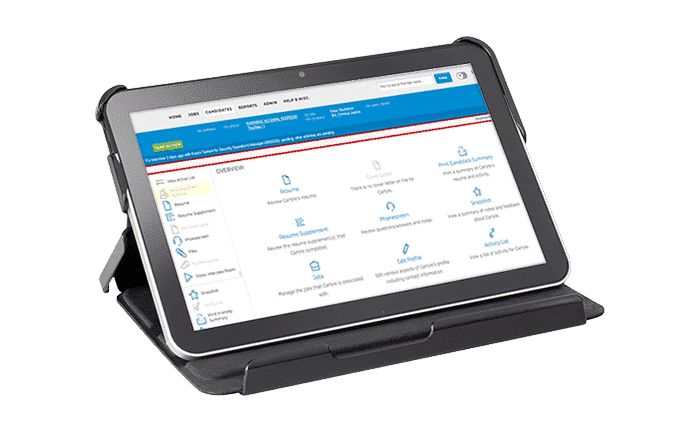
  1. Control – hiring organizations work hand-in-hand with designated DT project teams that virtually support and augment  their internal resources.  Additionally, DT provides a technology dashboard where Hiring Managers can watch the progress of their job searches in real time.
  2. No commitment – with DT’s RPI, there is limited contractual commitment and no minimum number of openings required.
  3. Scalability – DT works on-demand so organizations can launch one unique search one day and scale up for a large project the next.  What’s more, recruitment can start and stop almost immediately.
  4. Professional and executive expertise - DT has seasoned specialty recruiters aligned by job type and seniority, delivering exceptional results for exempt and senior management roles.
  5. Targeted marketing – DT’s writing team develops unique marketing pieces that position a company as the employer of choice and their opening as the position of choice for the right person. The idea is not to get everyone to apply, just those who are truly right for the job.
  6. Quality controls – DT’s RPI allows organizations to tap into a network of senior level, U.S.-based recruiters all tied together with a proprietary technology platform and a Six Sigma inspired process. A Quality Assurance representative is also assigned to each project.

The key to RPI’s appeal to hiring organizations is that DT partners with internal resources to virtually deliver recruitment solutions, expertise, technology and real knowledge sharing INSIDE of their own operations, offering increased control, quality and flexibility.  More information on Decision Toolbox and RPI.

Boomers’ Retirement Crisis: A Slow Crawl to the Grave for Many Companies

By Kim Shepherd, CEO, Decision Toolbox

By now we all know that a large portion of baby boomers can’t afford to retire.  Largely due to their lack of planning and saving over the years, as well as to challenging economic circumstances, boomers are finding themselves with no choice but to remain in the workforce longer than past generations.  The effect of the retirement crisis on the employment landscape is significant, and indeed is leading many traditional, cornerstone (Read: stodgy) companies slowly to the grave.

If your organization’s management and higher ups are all in their mid-high 50’s, you have an aging workforce.  The problem with companies in this situation is they are often not looking forward and identifying their future leaders – who are they grooming for when their aging leaders finally rotate out?  Our cornerstone companies need to get progressive, see the clogs in their pipes and plan for the future. How do they do this and avoid the inevitable “slow crawl”?  By attracting and grooming new Gen Y blood.  Many from the boomer generation see Gen Yers as snot-nosed, hedonistic little brats, but when they ask themselves…”did I do anything impressive by the time I turned 30?”…their answer is probably yes!  Gen Y offers a talent pool of 79 million people. These are our future leaders, and we must understand what motivates them to successfully attract and retain them within our organizations.  Decision Toolbox, a leading recruitment solutions provider and recognized thought leader on talent acquisition, has unique insight on attracting and retaining top-tier talent, including those in Gen Y…

Attracting and Retaining Gen Y Employees

Gen Yers live in a “Me, Inc.” world, seeing themselves as entrepreneurs who choose under who’s roof they will work and for how long.  Make your company an employer of choice for Gen Y by talking their language.  A few ideas to get you started:

  • Gen Y is motivated by bigger challenges. You must create new jobs under your roof so younger workers can grow while the aging pipes naturally clear.  No budget for new jobs? No problem, change existing job titles and compensation every 18-24 months to give the impression of movement, new development and challenge.
  • Gen Y values flexibility and work-life balance – give them the opportunity to work from a home office a few days a week.  Develop virtual water coolers, chat rooms and other tools to keep your virtual workers connected.
  • Gen Y cares about corporate culture and social issues, such as Green initiatives and other socially responsible programs.  They also embrace technology as part of corporate culture and expect its acceptance in the workplace, including communications via texting, blogging and the use of social media.
  • Gen Y expects feedback. Be sure to provide recognition and validation to your Gen Y workers. They are motivated by new challenges AND by being recognized for overcoming those challenges.

Ready or not, the aging workforce will eventually be forced to retire.  Stop your company’s slow crawl to the grave by planning ahead and injecting your workforce with your future leaders – speak the language of Gen Y and become an employer of choice.  More tips on attracting and retaining the Gen Y workforce.

The Hidden Unemployed

By Kim Shepherd, CEO, Decision Toolbox

As a national recruitment firm filling positions across all industries, titles and geographic lines for the last 18 years, Decision Toolbox has a unique view of the U.S. employment landscape.  From the 80,000 foot level, we can clearly see that the reported 9.8% national unemployment figure – concerning enough as it stands – is drastically deficient.

To begin with, many unemployed workers have gone through their unemployment benefits and thus are no longer counted in unemployment figures, though they are still not working.  Additionally, a steadily growing number of workers are underemployed.  Though the underemployed are working, they are taking part time jobs, or are in jobs that don’t fully employ their skills.  Underemployment, along with unemployment, is widely seen as a force slowing the economic recovery.  Despite its devastating effect on U.S. workers and the economy as a whole, underemployment is missed by most official definitions and measurements of unemployment.  Thus, the “official” unemployment rate is only telling part of the story.

The Underemployment Epidemic

To get a realistic reading on the health of U.S. employment, unemployment should be redefined to include underemployment.  The old definition of unemployment was “out of work”; the new definition of unemployment ought to be “out of YOUR work”.  According to thefreedictionary.com, underemployment is defined as:

  1. Employed only part-time when one needs and desires full-time employment.
  2. Inadequately employed, especially employed at a low-paying job that requires less skill or training than one possesses.
  3. Not fully or adequately used or employed (when one would like to be).

Laid off from their traditional lines of work, the underemployed are forced to take positions paying well below their accustomed compensation and lifestyles.  Truth be told, many people are working two jobs in an attempt to make ends meet and are STILL underemployed.

When taking the underemployed into consideration, the percentage of the U.S. workforce that is not working or is being involuntarily under-utilized is more along the lines of 30% – that’s a startling one out of three.

Effects of Chronic Unemployment/Underemployment

To further illustrate the epidemic proportions of underemployment, one can look to the industries that have been hardest hit by the recession.  These days, when Decision Toolbox is recruiting for an Accountant, our advertisements are pulling in ex Controllers and even ex CFOs who, just to get a paycheck, are willing to take enormous steps back in their careers and in their earnings.  Other occupations obliterated by the down economy include Mortgage Brokers and Real Estate Agents – these folks are almost extinct!  As independent contractors, are they collecting unemployment? No.  Are they being counted in the unemployment figures? No. Are they able to pay their mortgages? No.

When you speak with unemployed or underemployed workers, you’ll find many they have gone to Disneyland in their minds. They pluck up positivity and talk about how, with all of their free time, they’ve finally gotten around to doing those things they’ve been wanting to do for so long – “I’ve planted a sustainable garden!”, or “I’ve refurbished my father in-law’s Edsel!”.  In other words, they are living on the river we know as “DeNial”. Their 401Ks are cashed out, they have no more equity in their homes, they can’t even think about the “R” word – retirement is just too painful and scary a place to go at this point.  They don’t know what else to do.

Home, Sweet Home?

One might suggest relocation as an option to get out from under. Start fresh in a new geography with more jobs to offer!  Forget about it. If these underutilized workers are home owners, they have probably stopped making their mortgage payments. The banks are looking the other way – they don’t want to get stuck with another house that no one can buy.  So, they’re leaving these residents in their homes without receiving payment, hoping they will soon get jobs and start making the house payments again.  They’re literally squatters in their own homes.  If they do land a job in a new location, they can’t afford to relocate.  Even if the hiring company pays for relocation costs, the new hire would then be stuck with a house in their previous location and it’s mounting past-due mortgage payments as well as rent in their new location.  It’s a bleak picture to be sure; unfortunately, it’s life in this economy for many. In fact, test this theory in conversation at your next dinner party.

Reality Check

The best thing you can do right now is to not pull an ostrich. Get your head out of the sand and see where we really are with regards to employment and the economy – and be either angry or grateful.

Human Capital New Year’s Resolutions: Thinking Differently in 2011

By Kim Shepherd, CEO, Decision Toolbox

With 2011 well underway, I challenge human resource professionals to think outside of the box this year and facilitate real business change by making several, actionable “Human Capital New Year’s Resolutions”, such as:

  • Reconnect with the highly paid professionals you downsized before you lose some of your best talent to your competitors.
  • Treat your employees as if they are your best asset.
  • Create an environment to attract the best and brightest to add to your talent pool.

In Q4 of 2009, employers took a random 20% slice out of their workforce. Many chose the 20% with the highest salaries to axe.  Now there is a big candidate bucket –‘garbage bucket’ as viewed by many. But I challenge you; did you chop some of your best due to their high salary level? Maybe that bucket is not full of “garbage”, but a mixture containing some very talented and formerly highly paid professionals you may need to reconnect with before someone else hires them.

You also need to become an employer of choice – talk to employees so they believe their position is a position of choice, strengthen corporate culture, think in unconventional ways. What is top talent? They can do more with less, they produce more, they jump higher than their peers, they are the engine of your company – they are your greatest asset so be sure to treat them that way.

After every down year, every group of C suite folks put on rose-colored glasses. You must put on a strategic leadership hat and give full commitment to change. If people are your best asset, how do you create an environment to attract and keep the best people?  The more you empower your people, the more they will produce and manage themselves.  So, I challenge you to come up with a ‘New Year’s Bucket List’ that is actionable today.

Check out “The Bite Me School of Management” videos and book for more unconventional management tips.

Hiring in 2011…Three Good Reasons to Bring on a Disabled Veteran

By Jennifer Roberts, Recruiter, Decision Toolbox

At this time of year, many of us are reflecting back on the economic climate of 2010 and looking forward to a new and improving 2011. Many of Decision Toolbox’s clients are considering hiring additional new talent to prepare for 2011 and the continuing economic recovery. If your company is planning to hire new staff in 2011, please consider hiring a talented and qualified disabled American veteran.

In the November edition of HR Magazine, The Society for Human Resource Management (www.SHRM.org) wrote a terrific article highlighting the benefits for companies that hire disabled American veterans:
1. They get a talented and dedicated worker,
2. They receive up to a $4800 tax credit per veteran hired, and
3. They receive additional tax breaks if they are required to make workplace modifications to comply with the Americans with Disabilities Act.

Waste Management, a top client of Decision Toolbox, partners regularly with local military bases, the Veterans Administration, and the many other organizations that specialize in helping veterans transition back into the traditional American workforce.

Small, independently owned companies and large organizations alike can take advantage of these exciting work and tax relief programs. To learn more about how your company can honor a veteran, help him/her transition back into the civilian workforce, and positively impact your company’s bottom line please visit the following sites:

http://www.vba.va.gov/bln/vre/emp_resources.htm

http://www.irs.gov/faqs/faq/0,,id=199795,00.html

http://www.ada.gov/

Executive Search: Reduce Agency Fees

Executive Search has always fascinated me.  The largest executive search fee ever paid is said to be over $600M when Citigroup bought Old Lane hedge fund to snare Vikram Pandit to run their alternative investments group in 2007.  Those were exuberant times, and that was obviously an unusual situation.  Most executive search fees cost about a third of an executive’s salary.  That can translate into $60k-$100k or more!

Why do companies pay these fees?  In some cases it is warranted.  Executive recruiters can have a tight bond with CxO’s and influence them to consider an opportunity long before even their spouse knows they are considering a change.  Are you ready to cold call Larry Ellison and tell him why he should leave Oracle for your client?  I’d rather get caught feeding Mike Tyson’s tiger weight loss pills.

However, with today’s access to Directors, VP’s and CxO’s through online communities, executive search has become easier.

Click here to see how others do it for a fraction of the cost.

Leadership Secrets – Time is of the Essence

Leadership secrets rarely are secrets.  We can observe leaders in the most obvious and not so obvious places.  Recently I sat front row at Hippie Tendencies’ live performance in Denver and was awe struck by the lyrics created and sung by my friend Lisa Simmons: “Time is of the essence…precious and relentless….better learn my lessons…”   Her electric energy, and the fact that she was on that stage, as the lead vocalist in her own band, with an adoring crowd, is evidence of her leadership.

What makes a great leader?  Their biggest secret:  leaders fully exploit their greatest strengths, what they love to do. In turn, they find others in their tribe who excel in the areas they don’t.  For band members it may seem more straightforward than in our corporate world.  They know who will sing, who will play the bass, keyboard, guitar.  In our corporate worlds we have “job titles”, but we often get pulled into endless tasks that don’t leverage our greatest strengths.  Great leaders ensure the majority of their time is spent on what they are best at.

Time is of the essence.

“But all the other things have to get done, and I’m the only one I trust to do them.”  Then it’s time to groom someone to handle those tasks you shouldn’t be doing and let those tasks go.  Often the pressure and strain we feel at work is not how much we have to do, but what we’re doing.  When we are doing things we love time flies by, we look forward to it, we get energized.   If it’s draining you, then you have to get rid of it.  Great leaders know their unique role in their organization and focus on it.  At the same time, they pitch in for “all hands on deck” situations (which also demonstrates to the team no job is above them).  And identify their team’s interests and growth opportunities.

Keys to your sanity:

1. Figure out what you aren’t so good at, aren’t interested in and shouldn’t be doing.   Eliminate them from your job over a period of time.   Find people in your organization that are good at those tasks and want to do them.  Everybody who works with you already knows what you aren’t good at.  If you don’t know what you aren’t that good at, ask your peers or employees!

2. Identify the two to three areas where you can make the biggest contribution.  What energizes you, excites you, and where others are amazed at your passion and confidence are key areas to consider.  Prioritize those early in your day so they always get done.  Sometimes our days are filled with none of these items but the “must haves to the success of the business” take precedence.

3. Develop other leaders.  Quit making all the decisions.  Get in the habit of saying “I’ll let you decide” and asking “what would you do”?  Very quickly you will learn who your true leaders are and whom you can trust.  You will end up with an organization that reflects your strengths, not your weaknesses.

Check out “The Bite Me School of Management” videos and book for more zaniness.

Talent Management – The dirty truth

Wikipedia: Talent Management (TM) refers to the process of developing and integrating new workers, developing and retaining current workers, and attracting highly skilled workers to work for a company.   The dirty truth: as noble and intuitive as that sounds, many companies do it very poorly.  Why?

1.  Short-term focus:  Stock performance,  executive bonuses and many spending decisions are heavily tied to quarterly earnings.  Money flows first to things that can have an immediate impact on revenue and is cut from programs (like TM) when cash is tight.

2.  Intangible nature:  The benefits of many TM initiatives are harder to quantify than other parts of the business.

3. Lack of loyalty:  Layoffs have caused most employees to feel very expendable.  In turn, employees look for back-up plans and keep their options open.  Which leads to higher turnover.   Companies become less interested in investing in people that will likely leave or be asked to leave in a short period of time.

4. Carrot versus stick employee motivation:  Carrots costs money.  Sticks are free.  It’s also easier to observe what’s wrong and try to correct it, than to praise what’s right and encourage more of it.

HR executives will always have an uphill battle to keep Talent Management initiatives funded by the Execs who run their companies.  Never give up, never surrender!

Headhunting – Soul Matters

This ancient practice stemmed from the belief that the head contained “soul matter” or life force, which could be harnessed through its capture.  Today, headhunting is slang for recruiting, which relies much more on “attracting” candidates than “capturing” victims.

headhunting

Go back just 20 years and headhunting/recruiting was a much messier and stealthier business than it is today.  Not surprisingly, it had the sex appeal of a tribal headhunter.  There wasn’t Linkedin, networked computers or even electronic resumes for the most part.  And finding candidates relied on your willingness to hunt down the right person, sometimes in the parking lot of their employer because they rarely had voicemail or email.

I love the tools we have today.  And although we aren’t gathering “soul matter”, soul does matter.   It’s the invisible force that often determines whether a candidate calls back, whether they give you the time of day to hear your story and, ultimately, whether they believe in you and the true value of your offer enough to impact one of the most emotional decisions in their life.

How do you entice talent to consider your opportunity?

Passive Candidates and Sexual Harrassment

You’d probably consider a CEO of a $112B company, recently hailed as one of the “TopGun CEO’s”,  as a passive candidate and highly sought after.  Then when you learn he was just ousted last week from HP for sexual-harassment charges and “expense-account irregularities”, maybe not.  By definition this candidate is now active, but you won’t find him on Monster or CareerBuilder.

Passive candidates

And therein lies a dilemma: is active versus passive truly an indicator of candidate quality?  It’s true that some A+ candidates will easily progress through their entire career without ever posting a resume on a job board.   But if quality candidates are what you’re after, then carefully build a diverse and winning sourcing strategy.  One size doesn’t fit all.  It should vary greatly depending on job type, geography and industry.    Underused sources: associations, targeted email campaigns, online groups, blog searches and well crafted Boolean searches.

Where do you find your best candidates, and how do you adjust for job type, industry and location?

xyz Back to top »