Login Links

Thinking About Taking your Company Virtual? Aim for the CLOUDS!

By Kim Shepherd, CEO, Decision Toolbox

Though 2012 has just begun, smart business leaders are already looking ahead, planning where their organizations will need to be in 2015. More and more companies are realizing the benefits of transitioning to a virtual model and in a few years virtual work environments really will be the norm.

Decision Toolbox has been a 100% virtual workplace since 2003. Being pioneers in this space, we have learned firsthand that there is very much more to a virtual workplace than having employees work from home offices. We feel so strongly about this that we’ve adopted the term “cloud culture” to describe our own unique virtual environment.

Top business reasons for transitioning to the cloud include:

  • Cost savings – rather than paying for sticks and bricks, cloud culture companies can invest in the best people, tools and technology for business success
  • Scalability – cloud culture organizations can grow quickly and turn on a dime — as more talent is added, there is no need for more office space, furniture, equipment. etc.
  • Quality – in a cloud culture company, there is nothing for under performers to hide behind – there are no appearances to create distraction — it’s all about the numbers, baby!

Remember, to be successful in the cloud, you must ACT as though you have bricks and mortar and maintain the same cornerstones that are essential for success in a traditional workplace – culture, performance, appreciation, continuous improvement – and more.

Ditching the Sticks and Bricks
So you’re sold, you want to aim for the clouds, but how is this done? Before you start sending your people home to work you need to map out specifically which metrics and performance measurements you need to follow to ensure business is on track. A great way to identify your organization’s critical KPIs is to run your company remotely for a week or two. In short order, you’ll figure out exactly what metrics you need to know — is my sales force making the number of calls they need to be making, and so on. In a traditional business model, KPI’s and other metrics can get squishy. In a virtual environment, they cannot be an afterthought because they’re all you have to go on.  When you’re purely focused on the three P’s that make a company tick – performance, productivity and profit – yours will truly become a higher performing company and productivity will be off the charts.

Another critical factor for the success of your company in the clouds is your people. You must hire right. “A” players micromanage themselves better than you ever could.  They see metrics tracking as an opportunity to strut their stuff and display their results rather than as a way to be watched over by “big brother”.

Finally, the key to sustaining the three P’s in the clouds is to continually focus on and build out your culture.  Keeping people truly connected and not feeling like islands can be tricky – especially as you grow.  This is where real creativity comes in. At DT, we’re constantly adding “sticky factor” to our cloud culture. We have weekly team meetings, virtual water coolers and chat rooms, internal newsletters, unique onboarding and training processes, annual all-staff meetings – and the list goes on – all designed to keep employees connected, engaged and drinking the DT Kool-Aid.  As witnessed from our last annual all-staff meeting in Las Vegas, it is possible to build a strong unified spirit and camaraderie among people who have never actually met in person. Though our company doubled in size since our last annual meeting, the Vegas gathering was truly a love fest!

Top Five Tips for Achieving a Cloud Culture
To recap, below are five tips to building a successful cloud culture company:

1)   Lose the office – ok, that’s an obvious one

2)  Get some strong technology in place to track your metrics

3)  Hire A players who can be trusted to perform and manage themselves – keep top-grading as needed

4)  Stay focused on your culture – act as though you have sticks and bricks – get creative to keep everyone feeling connected and engaged

5)  Implement top-down leadership – this is not for the feint of heart – you need a bold, visionary leader in place who lives, eats and breathes the cloud culture

Going virtual truly is so much more than working from home. A successful transition requires a commitment to continually sharpen the saw and to aim for far more than having a virtual workplace, aim for a true cloud culture!

Healing Employment: RETENTION & DEVELOPMENT – Culture is King!

The final installment in an eight-part series, “Employment is Broken”, by Kim Shepherd, CEO, and Jeff Bloch, CMO, Decision Toolbox

You’ve followed our creative tips for successfully attracting, selecting, interviewing, hiring and onboarding employees in today’s challenging marketplace.  So, now that they’re in, how do you KEEP THEM?

Many organizations fall down in the final stages of the employment process – RETENTION & DEVELOPMENT – by neglecting to nurture and engage their employees and view them as candidates to be continually courted and mentored.  This is really the point where cultural glue kicks in.  Cultural glue cements your corporate culture, permeates your entire organization, can make a good team great, and holds teams together during tough times.

Creating Cultural Glue

Below are a few creative examples for developing sticky cultural glue in your company, and making it an inspired workplace where employees are “switched on” and no one wants to leave:

  • Flip the hierarchy – empower employees, respect their time, encourage  their ideas.
  • Leverage fresh eyes – ask new hires to point out processes in your company that don’t make sense – because they probably don’t!
  • Keep employees engaged and looking forward – change up employee work routines with new challenges every 18 months – ask them what their goals should be.
  • Pods, Tiger Teams, Tsunami Planning – group employees into Pods of 4-7 each, ask them to meet monthly for intensive Tiger Team meetings where they develop solutions to existing problems or challenges. Ask these same Pods to come together quarterly for Tsunami Planning meetings where they solve problems that haven’t happened yet!
  • Hold mutual reviews – review your employees quarterly and have them review you.  Ask them, “How can we BOTH do things better moving forward?”
  • Celebrate boo-boos – share mistakes openly and without judgment to help others avoid repeating the same boo-boos.

Creating cultural glue takes real thought, complete buy-in from the top, and constant focus to be kept in place, but it’s well worth the effort.  Make your organization a place where employees want to STAY and can GROW.  Remember, creativity is the difference between managing and leading others!

Healing Employment – HIRING & ONBOARDING: Preparing for Liftoff

Installments five and six in an eight-part series, “Employment is Broken”, by Kim Shepherd, CEO, and Jeff Bloch, CMO, Decision Toolbox

The fourth critical stage of engagement in the employment process is HIRING.  Once you’ve successfully attracted a quality applicant pool, suited and sifted your way through to select your top candidates, then connected personally and professionally with your finalist, you don’t want to inadvertently abort your mission in the offer stage!  Further, the manner in which you ONBOARD precious new hires sets the tone for their experience (and longevity) with your company.  Planning and ownership of the process will help ensure a successful launch…

Laggard & Co. vs. Best-In-Class, Inc.

In exploring hiring and onboarding, we found that, done right, these processes are really one fluid motion.  Below is a comparison of the hiring and onboarding experience at two difference companies.  John is the candidate of choice at Laggard & Co., and Mary is the finalist at Best-In-Class, Inc.  Who do you think will start his/her new job feeling the most valued, engaged, and eager to kick butt in their new position?

Laggard & Co. (John)

  • John receives a low-ball offer.  He feels negotiation is not an option (and it probably isn’t), so he accepts it.  He will likely continue to job hunt up to and after his start date.
  • There is no contact between Laggard and John before his start date 2 weeks after his acceptance – he will have lots of paperwork to contend with on his first day.
  • Day 1 – John’s computer and phone are not ready for him to use, induction is done by HR, and he is left alone most of the day to complete new hire paperwork.  John wonders if anyone else knows he’s there?
  • Week 1 – By Friday, John’s equipment is set up and ready to use.

Best-In-Class (Mary)

  • Mary receives a competitive offer and is asked how she feels about it, some negotiation may take place.
  • Mary’s onboarding process begins from the time she accepts the offer, she receives a welcome letter from the company CEO and a link to complete new hire paperwork online.
  • Day 1 – All equipment and passwords are issued, induction is done by the Hiring Manager, she is introduced to the team, taken to lunch, and a peer mentor is assigned as her “go-to guy” for questions.  Mary feels welcome.
  • Week 1 – Mary and her Hiring manager work on 30, 60 and 90-day goals and schedule follow-up meetings.

Recipe for Success

Research has revealed that the most valuable activities among Best-in-Class organizations to make new employees feel engaged are those that demonstrate the organization’s preparedness for the new employee’s arrival and show clarity and commitment to his/her professional development.

From our example above, John will surely come on board with the same lack of investment and enthusiasm that he was extended to by Laggard & Co.  He will likely continue to look for another opportunity and will be receptive to other opportunities that come his way.  Laggard displayed a clear lack of ownership of the hiring and onboarding process and poor understanding of its impact on retention.  In contrast, Mary will come on board feeling valued and invested with her new employer. Her focus will be on her work and her success will be reflected back to Best-In-Class, Inc… 3 – 2 – 1…we have LIFTOFF!

Stay tuned for the final installment in our series where we’ll explore the final critical stages of employment – RETENTION & DEVELOPMENT.

*Special thanks to Dawn Kohler, CEO, The Inside Coach, for her contributions to this post.

Healing Employment – INTERVIEWING Reality Check

Installment four in an eight-part series, “Employment is Broken”, by Kim Shepherd, CEO, and Jeff Bloch, CMO, Decision Toolbox

In the employment process, the third critical stage of engagement is INTERVIEWING.  Once you’ve successfully attracted a quality applicant pool, then suited and sifted your way through to select your top candidates, how do you effectively spend your time with the most promising talent?

Interviewing Illusions

The best way to enter into the interviewing process is to engage your brain in a fool-proof process, and NOT get caught up in “interviewing illusions”.  Today’s interviewing illusions include:

  • It is a candidate-rich environment, so hiring managers are in the driver’s seat
  • Unemployed candidates are not top talent
  • Comparative shopping is a good practice

Let’s burst these illusions right here and now.  Yes, it is a candidate-rich environment.  However, starting in late 2009, many an organization cut 20% of their workforce – talent with the highest salaries were cut – lots of top talent was added to the applicant pool.  This point also pokes a hole in the illusion that unemployed candidates are not top talent.  Finally, the notion that hiring authorities are in the driver’s seat and have the luxury of comparative shopping with top talent is a bust.  If you’re interviewing a talented professional, they likely have at least two other opportunities in the mix, so you likely DO NOT have the luxury of time in your decision making.  A bird in hand truly is worth two in the bush.

Effective Interviewing Strategies

A challenging economy does not change the hiring dynamic.  If you attract, select and interview a promising candidate, do not shoot yourself in the foot by making the assumption that you don’t need to suit that talent and move quickly.  If you find a promising candidate, your job is to make him or her feel that you are the employer of choice, and your opening is the opportunity of choice.

The typical hiring manger of today works like this: interviews three candidates, one on Monday, the others on Tuesday and Thursday, then thinks about it on Friday and vows to make a decision over the weekend (which never happens).  Later that week, they finally get back to the promising candidate they interviewed last Monday and that person is long gone, OR their interest in that company and their opportunity has dwindled significantly.  The hiring manager failed to sell himself and his company as the employer of choice.  To use another bird idiom, the early bird really does catch the talented worm.

You don’t want to be the typical hiring manager, so rework the typical process:

  • Research – prior to interviews, pull up the candidates on LinkedIn to find out more about them and work what you know about them into the interview – it’s personal and they will feel you are genuinely interested in them.  They will likely leave wanting to work for you.
  • Be ahead of the pack – interview all three candidates on the same day and send a text message that very afternoon to your top candidate(s) asking them back for a second time to interview you as soon as possible. You have positioned yourself as the employer of choice.
  • Communication – as a rule, the hierarchy of candidate communication is: snail mail is trumped by a phone call, a phone call is trumped by email, and email is trumped by a text message.
  • Add one or two creative interview questions to your mix that are playful, yet can also elicit real insight, such as “What do you want to be when you grow up?”

Final Tips

When interviewing applicants for your job opportunities remember to be humble.  An interview really is a two-way street.  Sit at a table next to the person rather than across your desk, if you like them, invite them back to interview you, follow up immediately, and most importantly, don’t forget that the talented candidate is always holding the cards.

Check back for our next installment in the “Employment is Broken” series, where we’ll delve into the murky depths of HIRING.

Healing Employment – Sifting & Suiting for Effective SELECTION

Installment three in an eight-part series, “Employment is Broken” by Kim Shepherd, CEO, and Jeff Bloch, CMO, Decision Toolbox

Part one of our series set the stage for the contention that the world of employment is woefully broken, and at each of its 7 Stages of Engagement:  attraction, selection, interviewing, hiring, on-boarding, retention and development.  In part two, we discussed problems and solutions at the first critical stage of ATTRACTION.  In this part three of our series, we’ll examine the second stage of engagement – SELECTION.  Once you’ve successfully attracted a viable pool of job applicants, how do you effectively determine on which prospects to spend your valuable time?

How Selection is Broken

Without a plan, recruitment can be a real time-sucker.  The process of selection is particularly hazardous, especially in our current economy.  We have a “Perfect Storm” scenario – a candidate rich environment, a talent drought, available jobs, and high unemployment – creating hiring quicksand all around us and it’s hard to determine where the real talent is hiding.  The job market is full of overqualified applicants willing to take any job with a paycheck – for the time being.  It can be tempting to hire on an overqualified candidate at a great price for all they bring to the table, but once the job market shifts, they will be gone.  Remember, you can’t buy up the food chain for long.

Another pitfall is to assume unemployed applicants are not A-players.  You may think the unemployed are not worthy of your time.  Think again.  In late 2009, many companies slashed 10-20% of their workforce, and those cuts were made to their higher salaried positions – their A-players.  This top talent is all around us now – they may have struck out on their own to perform consulting work, gone back to school, taken a lesser paying job (as per above), or are engaged in other non-traditional means of employment until the economic smoke clears.

So, how does one avoid being sucked into the confusing selection vortex?  How do we determine who to spend our time on?  By hatching a plan, a well thought out selection process that includes both sifting and suiting.  Here’s how…

Plan your Work and Work your Plan

Once you have screened your resumes and developed a first batch of potential candidates, shoot them each an email.  For this initial email, come up with eight strong questions around the skill-set that you desire.  For example, if you’re looking for an experienced Sales Manager, you may ask questions like:

  • “In the last five years, what role has building a sales team played in your job?”
  • “ What size teams have you managed in the past?”
  • “Provide a brief example of a time when you have turned a “B” player into an “A” player?”

Next, develop three strong questions around the soft skills that you’re seeking, such as:

  • “What aspects of this position do you find attractive?”
  • “Which of your personality characteristics do you feel would be most beneficial to this role?”

If an applicant is unemployed, ask about the circumstances of their unemployment.

Based on the answers you receive, narrow down your pool and set up phone “meet and greet” conversations with those in which you are most interested.  In this stage, be ready with four key logistics questions to discuss – these may be related to the job location, salary, cultural fit, career pathing, etc.  At the same time, be prepared to assume the role of Suitor, positioning yourself as the employer of choice to those A-players on the other end of the phone.  Most importantly, you recognize that everyone’s time is important, and ensure nobody’s time is wasted.

The final stage in selection is to decide who, based on your phone screening process, you should bring in for an in-person interview.  If you have done a thorough and consistent job in the initial layers of screening, you will probably have a small pool of well-qualified candidates to meet – and not too many surprises.  Call these candidates personally.  Tell them you would like to meet them, and to be prepared to interview YOU as well.  At this point, they will either opt in or out of the interview, and you’re in the home stretch!

Look out for the next installment in our series, number four, where we’ll dissect and reassemble the next stage of broken stage of employment and engagement – INTERVIEWING.

Healing Employment – The Laws of ATTRACTION

Installment two in an eight-part series, “Employment is Broken” by Kim Shepherd, CEO, and Jeff Bloch, CMO, Decision Toolbox

In part one of this series, we reviewed, from a 30,000 foot level, the many ways in which the world of employment is broken.  In our next seven installments, we’ll break “employment” (recruiting, hiring and retaining employees) down into seven critical stages – the 7 Stages of Engagement – closely examining how each is broken, and offering creative tips for success.  The first of the seven stages we’ll discuss is ATTRACTION.  How is the process of attracting top talent broken, and how can we heal this aspect of the employment world?

How Attraction is Broken

Though hiring well is such a crucial component to business success, many companies approach the process without giving it much thought.  The typical recruiting scenario looks something like this:

A staffing need arises, and the hiring manager runs to HR with his hair on fire.  With HR’s hair now also on fire, a dusty, old job description is unearthed and immediately posted on a couple of popular job boards.  Within a few days, applicants are responding, but they are less than stellar.  Time is of the essence, and we must “get a butt in a seat”, so HR pushes forward with the arduous process of screening through the mass of under qualified and overqualified in hopes of finding a few applicants with potential to move on to the phone screen stage.  And so it goes…

With so little thought given on the front-end of this process – to what it takes to ATTRACT the right applicants for a particular position – it’s no wonder the applicant bucket is often a time-draining disappointment.  Unfortunately, for both the company and the candidate, the “hair on fire” approach to recruiting often results in a poor, mismatched hire.

Design What you Want, or Deal with What you Get

To truly maximize your time, effort and effectiveness in recruiting, invert the pyramid. 

Stop and put in some time up front to get very clear on several key questions:

1)      What does the ideal candidate for this position look like?

2)      What are the most attractive aspects of this position?

3)      What are the most attractive aspects of your organization?

If you want an A-player, you need to think about what makes you an employer of choice, and what makes the position an opportunity of choice for an A-player.  You must then leverage your job description to brand yourself and the position as such.  A-players respond to a sexy job description, one that includes not only the job’s duties and requirements, but also details the exciting opportunities the position and the company offers to the right person.  Do you have a strong corporate culture?  Is career pathing, or development/growth opportunities available at your organization?  Are key contributors duly rewarded?  Are exciting initiatives afoot?   Talented people will change jobs for a better culture, professional development, career pathing, and the opportunity for new, exciting challenges.

From Sifter to Suitor

When you are clear up front on the kind of talent you are looking for, and you are effectively communicating what you have to offer, you are a suitor.  Suitors court the top talent they desire, rather than hopefully sifting through applicants that may or may not fit the bill.  Being a suitor is the key to ATTRACTION in recruiting.

Stay tuned for installment three in our series, where we’ll explore the next stage of engagement – SELECTION.

Employment is Broken…if it Had a Name, it would be Sybil

Installment one in an eight-part series by Kim Shepherd, CEO, and Jeff Bloch, CMO, Decision Toolbox

In case you haven’t heard, employment is broken.  Like the tormented Sybil in the book and movie of the same name, the world of employment is currently exhibiting multiple personalities.  We have a candidate rich environment, a talent drought, available jobs, high unemployment, and a communication revolution, to name a few, all playing out simultaneously.

At this point in history, the combined effects of downsizing, unemployment, underemployment, off-shoring, outsourcing, technology, telecommuting, social media, increased competition, and good old fashioned denial have rendered the processes of recruiting, hiring, and retaining employees – as we’ve known them – virtually useless, and it’s being felt on both sides of the fence.  Let’s review.

Chaos on the Hiring Side

If you’re a hiring manager in 2011, your team has inevitably been cut in the last few years and you are being asked to do much more with much less.  You are stretched and really don’t have the time needed for effective recruiting, interviewing, on-boarding and retention efforts.  At the same time, the clock is moving at warp speed and competition for A-players is fiercer than ever.

Adding to this unwieldy mix is the use of social media and the Internet in employment.  Which sites to use for recruiting? Should I investigate job candidates’ personal Facebook profiles? What if candidates are on Facebook during work hours, does this mean they would do this at my company, too? What if their jobs require their use of the Internet every day – how should I monitor and manage its use?  In the past, one could post a position and a reasonable pool of the “right” people would apply for it.  With the explosion of the Internet, jobs are exposed to innumerable job seekers, and attract many people to your pool who are “not right” for the job.  The system is so clogged by unqualified and overqualified potentials, it’s extremely difficult and time consuming to sift through and find the A-players, those who are right for your specific job, amidst all of the other “noise”.

The Gen Y crowd is further muddying the employment waters.  Having seen their parents diligently work their tails off for years only to be unceremoniously dumped by their employers when the economy tanked, they’re jaded and are in no hurry to enter the workforce.  Though Gen Y is the workforce of the future, many are still living at home, making pocket money and going nowhere fast in menial jobs with no opportunity.  Why risk venturing out into that employment mess when things are pretty comfortable as they are?  Those Gen Yers who do have their eyes on the future are also a breed new to the employment scene.  Their idea of success is work-life balance and a low carbon footprint. Gone are the days of proving yourself for years and working your way through the ranks and up the career ladder. Ambitious Gen Yers move in, take what they need, and move on – quickly. Thus, companies are no longer hiring to groom future leaders, as they know their younger workforce will probably turn over within two years time.

These days, employees of all generations are wary.  Always on the lookout for new opportunities, they expect the house will crumble at any time and leave them in the financial lurch.  Ours has become a “Me, Inc.” world, where companies and employees are only looking out for “number one”.  Workers view themselves as entrepreneurs choosing to work for a time under a corporation’s roof.  Ethics and integrity – on the employer and employee sides – also seem to be a thing of the past. Employers aren’t offering severance pay to downsized employees, candidates aren’t showing up for interviews, but at the same time, many workers are underemployed, and are willing to do any job below their typical station because a paycheck is attached to it.  It’s Sybil all over again.

Turmoil in the Trenches

As on the employer side, pain and confusion is rampant among job seekers as well as those who are working.  MetLife’s Ninth Annual Study of Employee Benefits Trends finds that employee loyalty, like employee morale, has reached a low point. Forty-seven percent of employees surveyed say they feel very strong loyalty to their employers, down from 59 percent three years ago.  And while many employers saw productivity gains over the past year, 36 percent of employees hope to be working elsewhere in the next year.  In a discussion about employment trends today, one cannot omit the effects of outsourcing.  These days, there are a gazillion businesses that can do anything that a company needs – any function can be put out to bid for a small fee – yet another trend making internal employees less valuable, less comfortable, and less loyal.

Being “let go” or downsized and subsequently unemployed is a severe blow to one’s confidence and financial security.  Yet, according to UCLA researchers, there’s an even more degrading downside to going jobless in the Great Recession, proving once and for all that a wannabe hard-working American just can’t win:  “We found that individuals tend to make negative associations with those who are unemployed, which often leads to unfair discrimination,” says Margaret Shih, co-author of “Reconnecting to Work: Consequences of Long-Term Unemployment and Prospects for Job Creation.”  In other words, no matter why they’re out of work, unemployed job applicants are more likely to be tagged no-good slackers, and therefore are less likely to be hired.  With today’s reported (read: inaccurately low) unemployment rate at 8.8%, this is a daunting realization for literally millions of out of work Americans.

Finally, topping off the mayhem, every day we hear in the media that the economy is picking up and hiring is improving – the unemployment rate is slowly declining.  However, the unemployment rate does not take into consideration the hidden unemployed – those who have given up, are no longer looking and have come to the end of their unemployment benefits.  Then we have the underemployed – they are officially employed, but are taking home a fraction of their previous earnings – should they really be considered gainfully employed?

As with Sybil, a healing of the wounded employment arena will take getting our heads out of the sand and directly addressing all of its current personalities.  Change needs to happen, and real creativity is needed to see order through the chaos.

Creativity is the Key

The preceding review of the employment landscape has set the chaotic stage for the next seven installments in our series – The 7 Stages of Engagement:

1) Attraction – how to bring potential candidates into your pool;

2) Selection –how to decide who to spend your time on;

3) Interviewing – how to spend your time with promising candidates;

4) Hiring – how to hire;

5) On-boarding – how to effectively bring new hires into your company;

6) Retention – how to keep your strong employees, and

7) Development – how to make your good employees even better.

We’ll look at the seven stages of the broken employment process, and will provide understanding and creative tips for winning at each critical stage.

Where is the Top Talent? Hiding in Plain View.

By Kim Shepherd, CEO, Decision Toolbox

Those companies who slashed 10-20% of their workforce in late 2009 to hunker down and “keep their powder dry” in 2010-2011 are probably finding themselves in a pickle by now.  For many, these workforce cuts were made to their A players who were earning the higher salaries – leaving them with a team of B players from which they need more output.  Now feeling the pain, many are looking to add A players back in, but don’t know where to find them.

The A players are really all around us.  Many are in candidate databases, others can be flushed out with strong company and job branding (Note: archaic job descriptions will be summarily ignored!), and most importantly, the magic of ongoing, effective NETWORKING cannot be underestimated.

Networking: It’s Not All About You

Working and playing in the recruitment solutions space for more than 20 years, I have noted some interesting behaviors.  I attend lots of meetings, such as those of Employment Management Associations.  These meetings are attended by companies/hiring or talent acquisition managers looking for certain talent, as well as certain talent looking for work.  Funny thing, many of these hiring managers are not effectively networking, they are selling themselves rather than looking to be sold.  Thus, they don’t connect the dots and see the potential relationships and opportunities (current and future) that are right under their noses.

If you’re in a hiring position, social and professional events should always include networking, and networking should always be about building a virtual bench. Whether you’re actually ready to bring someone new on at any given moment matters not, you should still be working meetings, conferences, cocktail parties, and other events with an eye to build relationships with superstars who could someday come work for you.  This way, when you are ready to hire, you already have a stable of A players from which to start your search.

Courting Superstars

So, once you identify your future A-list employees, how do you develop a relationship where you won’t forget about each other?  You must make a plan to “touch” these people with some kind of frequency.  Add them to your email list receiving daily quotes, invite them to read your blog, send them articles or informational tidbits on topics that you know to be of interest to them.  As you court these A players with regular contact, after a time, you have built a bench of superstars.

A few key networking tips to remember:

  • Most people attend networking events just to network themselves, shift that perspective to networking to build a virtual bench
  • Constantly keep your eye out for the A players you would like to someday join your team
  • Once superstars are identified, go to LinkedIn to see their social networks, find out their interests, etc.
  • Create several avenues to touch them monthly – send them industry info, your blog link, daily quotes, etc.
  • Take them out to lunch, coffee or for a glass of wine once a month/quarter
  • When you’re ready to hire a superstar, go to your virtual bench and have at it!

Decision Toolbox has been building a virtual bench for years.  We’re always on the hunt for top talent, and that’s how we’ve built our growing team of superstars.

Proof is in the Proactive Pudding

After your next networking event (conference, cocktail party, etc.), ask yourself how many people you added to your virtual bench.  If the answer is zero, then it was not a networking effort on your part, it was nothing more than show and tell.  Next time, use these events as opportunities to proactively search for top talent.  Heck, make contact with and start courting your top competitors – after all, anyone who’s potentially better than you, you want on your team.

Six Ways Recruitment Partner Insourcing Trumps Traditional RPO


A Good Solution Gets Even Better

Recruitment Process Outsourcing (RPO) has gained steady momentum in the last 10 years and with good reason.  The U.S. has seen an increasingly dynamic labor market, with workers changing employers more often than ever before and a strong shift toward the use of contract and part-time labor.  These trends increase recruitment activity and contribute to more companies turning to RPO due to its promise of improved quality, cost, service and speed in hiring.

But, with all of RPO’s plusses as a recruitment solution, there are also some minuses.  Decision Toolbox (DT), a nationwide provider of project based hiring and a pioneer in the RPO arena (DT introduced an RPO offering in 2000, four years before it became industry practice), has developed Recruitment Partner Insourcing (RPI) as the next generation of talent acquisition and a new way of delivering RPO that offers all of its benefits while alleviating its less than appealing aspects.

Traditional RPO vs. Decision Toolbox RPI

RPO offers many advantages to an organization such as improved time to hire, increased quality of candidates, access to verifiable metrics, reduced cost and improved governmental compliance. However, the disappointing and often frustrating features of traditional RPO can put a disappointing spin on the solution.  Decision Toolbox’s Recruitment Partner Insourcing solution addresses these concerns head-on.  Below are six ways that RPI improves on traditional RPO:

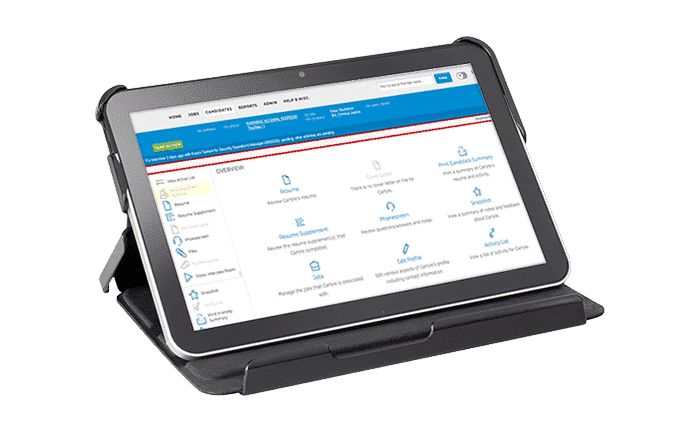
  1. Control – hiring organizations work hand-in-hand with designated DT project teams that virtually support and augment  their internal resources.  Additionally, DT provides a technology dashboard where Hiring Managers can watch the progress of their job searches in real time.
  2. No commitment – with DT’s RPI, there is limited contractual commitment and no minimum number of openings required.
  3. Scalability – DT works on-demand so organizations can launch one unique search one day and scale up for a large project the next.  What’s more, recruitment can start and stop almost immediately.
  4. Professional and executive expertise - DT has seasoned specialty recruiters aligned by job type and seniority, delivering exceptional results for exempt and senior management roles.
  5. Targeted marketing – DT’s writing team develops unique marketing pieces that position a company as the employer of choice and their opening as the position of choice for the right person. The idea is not to get everyone to apply, just those who are truly right for the job.
  6. Quality controls – DT’s RPI allows organizations to tap into a network of senior level, U.S.-based recruiters all tied together with a proprietary technology platform and a Six Sigma inspired process. A Quality Assurance representative is also assigned to each project.

The key to RPI’s appeal to hiring organizations is that DT partners with internal resources to virtually deliver recruitment solutions, expertise, technology and real knowledge sharing INSIDE of their own operations, offering increased control, quality and flexibility.  More information on Decision Toolbox and RPI.

Boomers’ Retirement Crisis: A Slow Crawl to the Grave for Many Companies

By Kim Shepherd, CEO, Decision Toolbox

By now we all know that a large portion of baby boomers can’t afford to retire.  Largely due to their lack of planning and saving over the years, as well as to challenging economic circumstances, boomers are finding themselves with no choice but to remain in the workforce longer than past generations.  The effect of the retirement crisis on the employment landscape is significant, and indeed is leading many traditional, cornerstone (Read: stodgy) companies slowly to the grave.

If your organization’s management and higher ups are all in their mid-high 50’s, you have an aging workforce.  The problem with companies in this situation is they are often not looking forward and identifying their future leaders – who are they grooming for when their aging leaders finally rotate out?  Our cornerstone companies need to get progressive, see the clogs in their pipes and plan for the future. How do they do this and avoid the inevitable “slow crawl”?  By attracting and grooming new Gen Y blood.  Many from the boomer generation see Gen Yers as snot-nosed, hedonistic little brats, but when they ask themselves…”did I do anything impressive by the time I turned 30?”…their answer is probably yes!  Gen Y offers a talent pool of 79 million people. These are our future leaders, and we must understand what motivates them to successfully attract and retain them within our organizations.  Decision Toolbox, a leading recruitment solutions provider and recognized thought leader on talent acquisition, has unique insight on attracting and retaining top-tier talent, including those in Gen Y…

Attracting and Retaining Gen Y Employees

Gen Yers live in a “Me, Inc.” world, seeing themselves as entrepreneurs who choose under who’s roof they will work and for how long.  Make your company an employer of choice for Gen Y by talking their language.  A few ideas to get you started:

  • Gen Y is motivated by bigger challenges. You must create new jobs under your roof so younger workers can grow while the aging pipes naturally clear.  No budget for new jobs? No problem, change existing job titles and compensation every 18-24 months to give the impression of movement, new development and challenge.
  • Gen Y values flexibility and work-life balance – give them the opportunity to work from a home office a few days a week.  Develop virtual water coolers, chat rooms and other tools to keep your virtual workers connected.
  • Gen Y cares about corporate culture and social issues, such as Green initiatives and other socially responsible programs.  They also embrace technology as part of corporate culture and expect its acceptance in the workplace, including communications via texting, blogging and the use of social media.
  • Gen Y expects feedback. Be sure to provide recognition and validation to your Gen Y workers. They are motivated by new challenges AND by being recognized for overcoming those challenges.

Ready or not, the aging workforce will eventually be forced to retire.  Stop your company’s slow crawl to the grave by planning ahead and injecting your workforce with your future leaders – speak the language of Gen Y and become an employer of choice.  More tips on attracting and retaining the Gen Y workforce.

xyz Back to top »